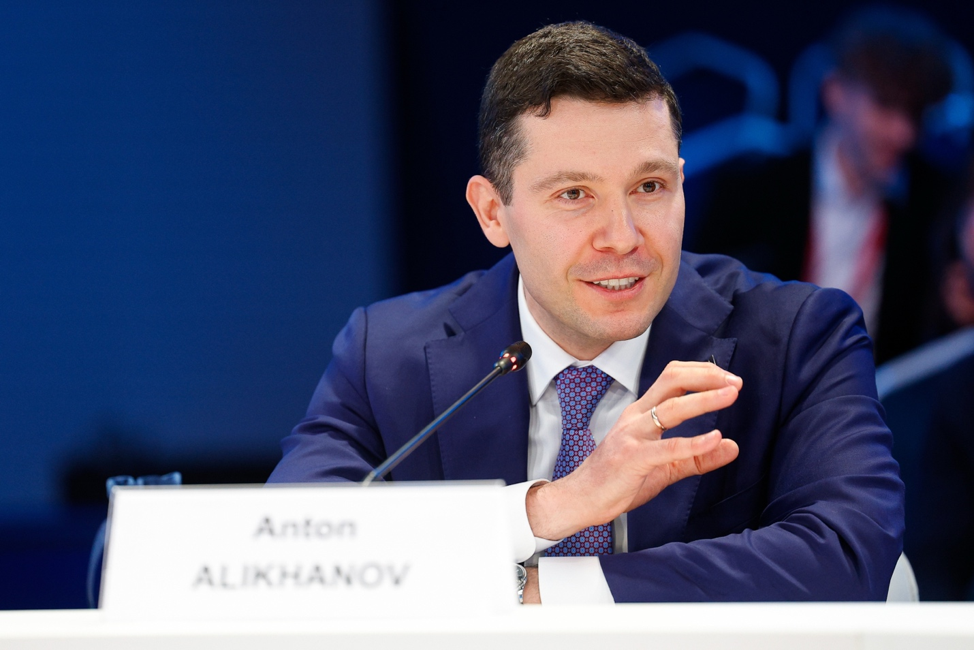
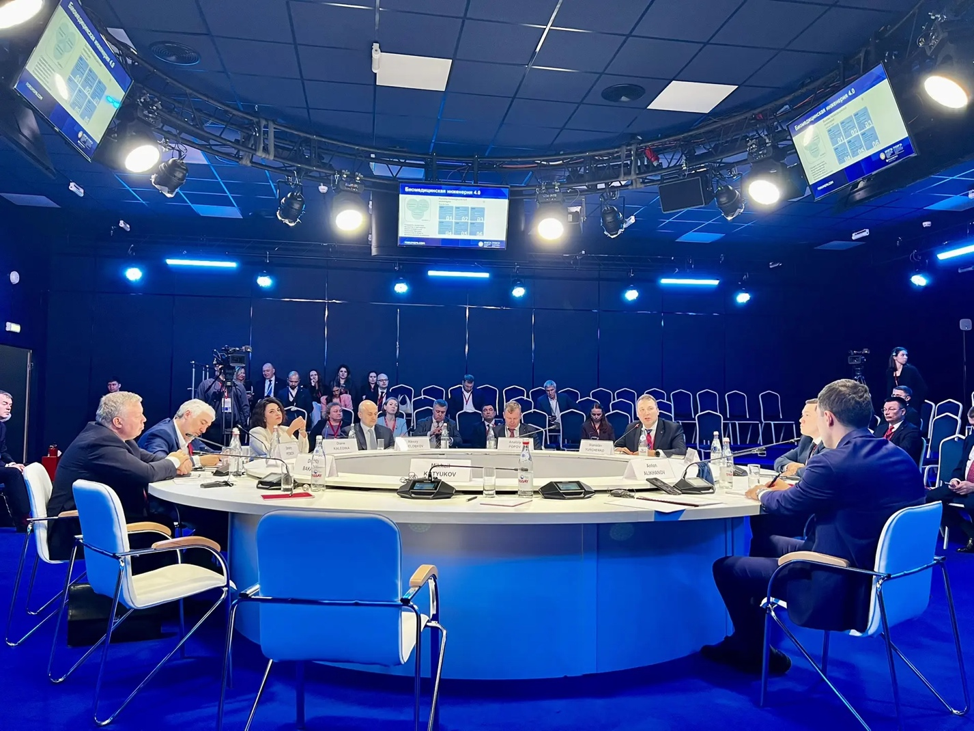
Minister of Industry and Trade of the Russian Federation Anton Alikhanov moderated the session "New Industrialization — Why? The Future of Russian Industry" at SPIEF 2026. The event was attended by representatives of business, industry, and professional communities.
The Minister's speech focused on the vision of new industrialization up to 2050. He stated that the country is currently shaping an industrial model amid broken supply chains, shifting markets, and changing technologies.
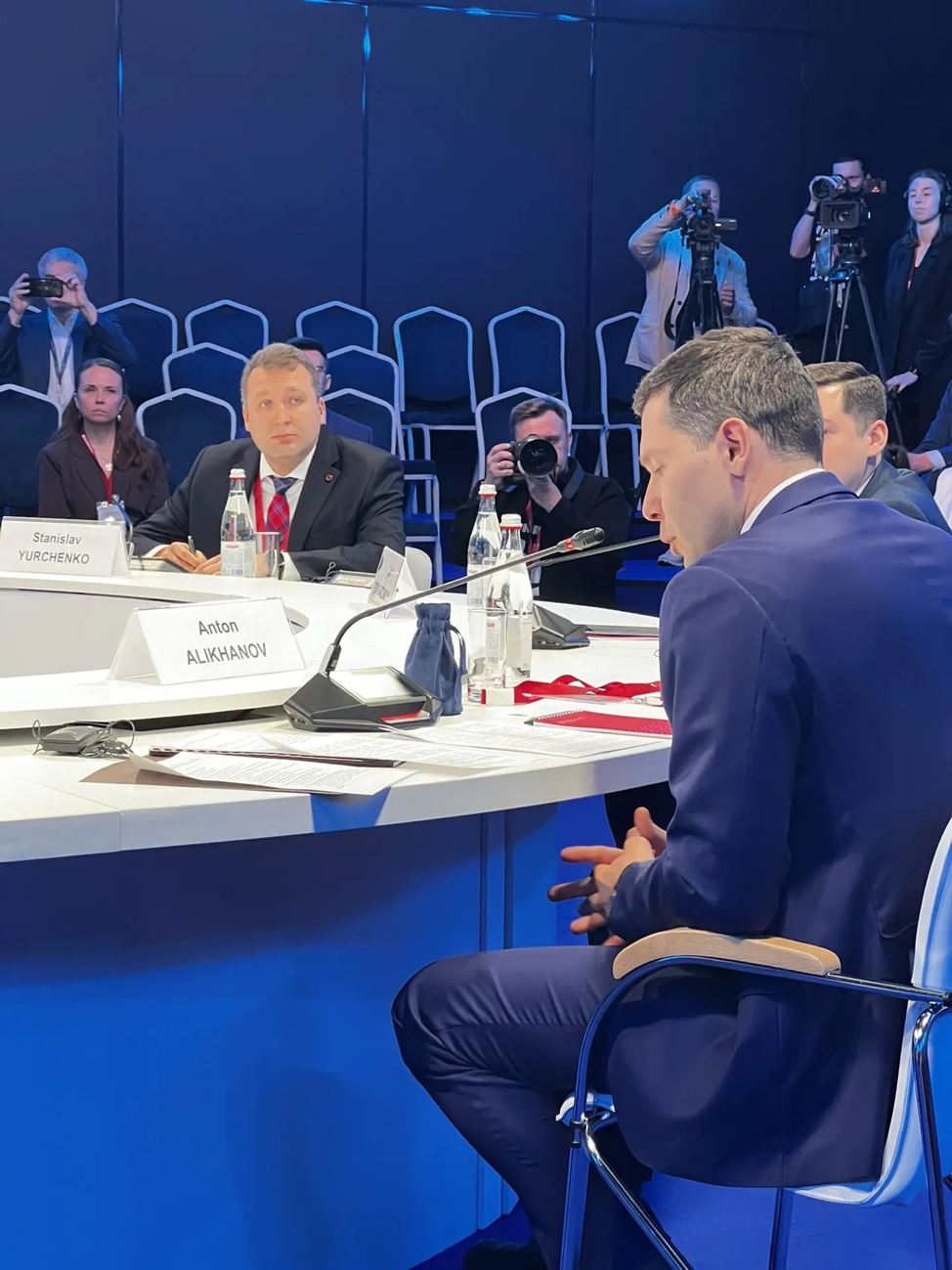
"Without its own industry, a country loses its sovereignty. Industry is once again becoming the center of development — but in a new, highly automated form," said Anton Alikhanov.
The Head of the Ministry of Industry and Trade identified three aspects of leadership that, in his view, must be achieved:
- Global Leadership Zone — industries where extreme climatic conditions create a natural monopoly barrier: nuclear energy, icebreaker technologies, unmanned aerial systems (BAS), low-temperature robotics, and Arctic engineering.
- Technological Autonomy Zone — industries where the independence of the industrial complex is more important than superiority: power engineering, civil aviation, pharmaceuticals, industrial chemistry, mature microelectronics, and machine tool building.
- Individual technologies where the cost of localization exceeds the benefit gained (lithography, precision optics, certain classes of bioreactors).
The Minister then spoke about the need to automate production. He noted that, given limited access to technology and a shortage of personnel, this is becoming a necessity.
"By 2050, industry in key sectors — from metallurgy to mechanical engineering — will consist of highly autonomous systems where the human role is reduced to design, configuration, and control," said Anton Alikhanov.
The Minister emphasized that the industry of 2050 will be a network of distributed autonomous production facilities connected by unmanned logistics, management platforms, satellite communications, and predictive coordination systems.
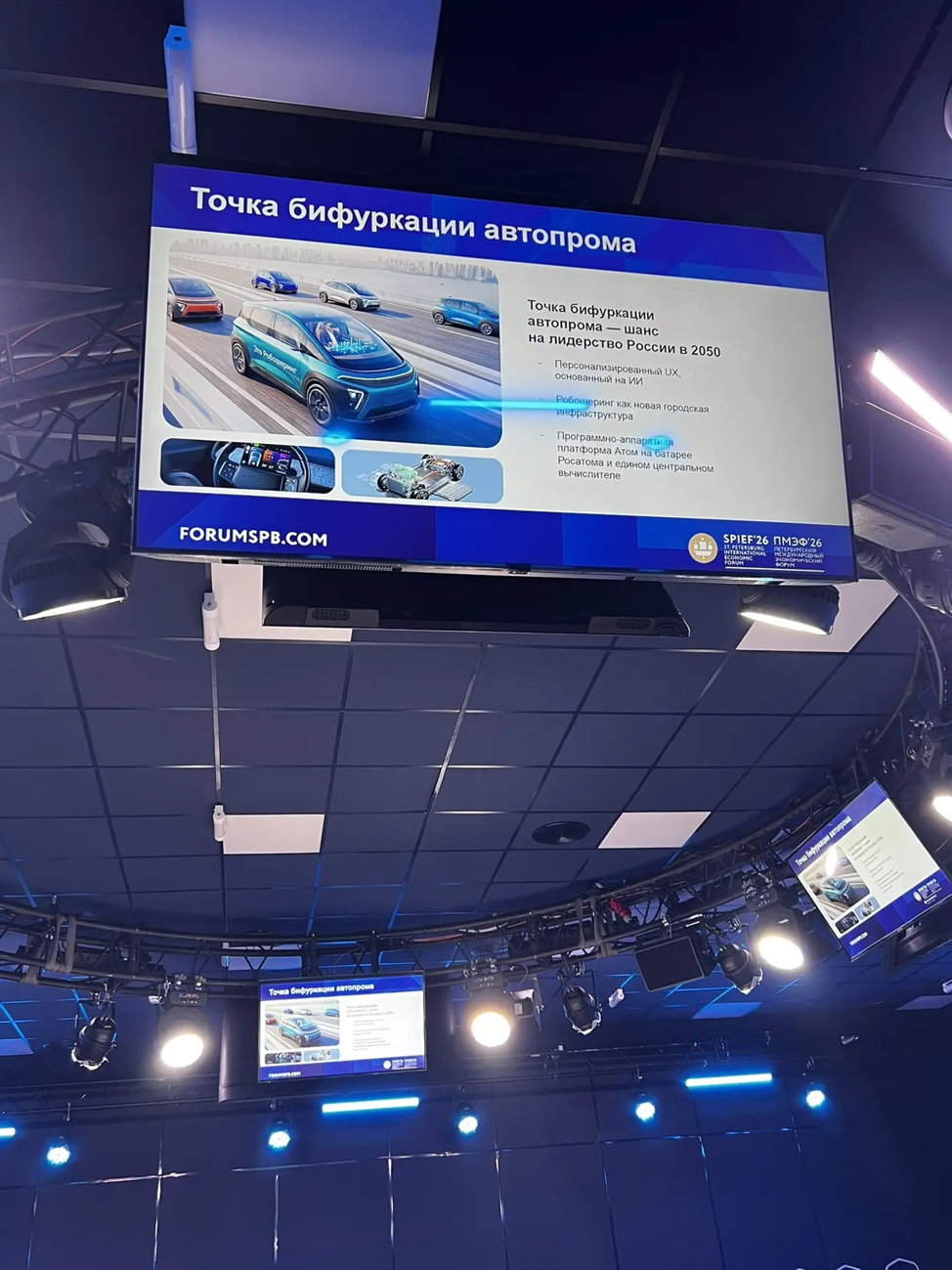
"Autonomous transport reduces logistics costs by 30–40%, eliminates dependence on driver shortages, and can operate around the clock in harsh climatic conditions — from the Arctic to remote industrial zones of Siberia and the Far East," said Anton Alikhanov.
The Minister also noted that Russia has a vast and diversified energy base, its own resources, and one of the strongest nuclear schools in the world. The country already remains the largest exporter of energy resources and a global leader thanks to Rosatom's projects.
"Energy sovereignty serves as the foundation for industrial independence, technological stability, and a new industrial architecture for the country," continued Anton Alikhanov.
In conclusion, the Minister noted that Russia has a large raw material base, a strong school of chemistry and materials science, and reserves of rare earth metals. However, the most sensitive technological gap today remains in the areas of specialty chemicals, materials for microelectronics, industrial biotechnologies, and high-precision components.